The Hormuz Crisis and the Hidden Cost of Fragmented Inventory
Supply chain disruptions come in different shapes. Tariffs arrive with a date and a percentage — the causal chain is direct, and most businesses find a way to respond. The Hormuz crisis is not working that way. Its effects are longer, more diffuse, and far harder to trace back to a single number on a procurement report. That is precisely what makes it so expensive for product businesses operating on fragmented inventory systems.
Blog
October 13, 2025
A Disruption Unlike the Others
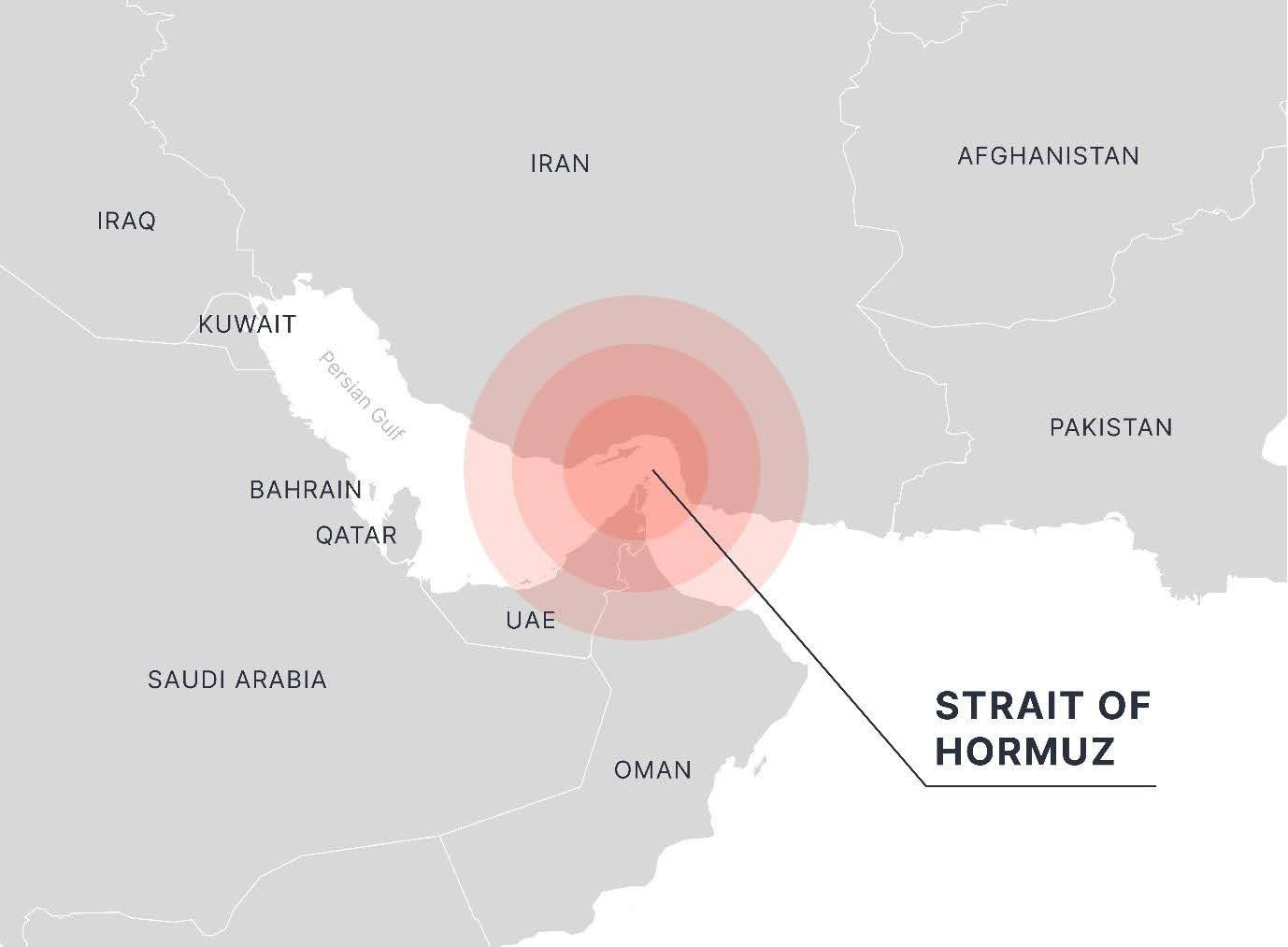
Since February 28, both of the Middle East's two major maritime corridors have been severely disrupted simultaneously. The Strait of Hormuz — which handles roughly 20% of global oil trade — saw its effective closure raise the cost of every oil-derived input across global supply chains. At the same time, the Red Sea route has been disrupted since late 2023, with ceasefires announced and broken, and the situation continuing to evolve. The effects on global shipping are locked in regardless of how the conflict resolves in the near term.
Product businesses that do not even source from either region are absorbing the impact — in higher freight costs and supplier lead times that have lengthened materially since the disruptions began. No business operating in global trade is insulated from this.
The Multi-Channel Inventory Problem
Brands selling across multiple sales channels face a specific, compounding version of this problem. In a typical multi-channel operation, inventory is tracked across multiple disconnected systems — one for each channel and each fulfilment partner. Those systems do not share data. Each new channel adds another partial stock record to reconcile manually.
The consequences are structural. Committed inventory at one channel does not automatically appear as unavailable elsewhere. Overselling becomes a recurring operational risk. Purchase orders get placed that duplicate stock already committed through another channel — tying up working capital that tighter freight margins simply cannot absorb. In stable conditions, this fragmentation is a manageable background problem. During a supply disruption, it becomes an expensive liability.
Reordering on Incomplete Data
The natural instinct when disruption hits is to reorder — get ahead of shortages, buffer against delayed lead times, protect your most important SKUs. That instinct is correct, but it only works if the business has a complete, current picture of its committed stock across every channel.
Merchants operating on disconnected systems are reordering on incomplete data. The result is predictable: either excess inventory in slow-moving SKUs, or missed demand precisely where it is highest. Both outcomes cost money. In a high-freight environment where margins are already compressed, neither is recoverable without pain.
Forecasting Requires a Consolidated View
Good demand forecasting has always depended on accurate data. For multi-channel merchants, reliable forecasting requires a consolidated view of stock across every channel and location, mapped against open orders and supplier lead times — updated continuously, not periodically. During a supply disruption, those lead times change faster than standard forecasting cycles can account for.
Forecasts built on pre-disruption supplier data produce reorder recommendations that are already outdated by the time they reach a procurement desk. The lead time inputs are wrong. The stock positions are incomplete. The result is a plan that looks rigorous but is entirely disconnected from current operating reality.
The Stack That Grew Incrementally
How did so many multi-channel merchants end up here? The answer is incremental growth. Each new sales channel gets a new tool — chosen because it is purpose-built for that channel, not because it integrates with the rest of the operation. D2C fulfilment, wholesale, marketplace, retail — each adds another tool. The stack grows one channel at a time rather than as a designed whole, and no single system ever holds the full picture.
A single system that consolidates stock and committed orders across every channel and partner gives the operations team one current view to plan from. That architecture — consolidation by design rather than reconciliation by effort — is what turns fragmented data into actionable intelligence. It is also what allows businesses to trace their own exposure through a disruption like Hormuz before they absorb the cost, not after.
The businesses that came through the tariff cycle best had one thing in common: a clear, complete view of their full stock position before the pressure hit. That clarity is not a luxury reserved for large enterprises — it is an operational prerequisite for any product business selling across more than one channel.
At 20cube, we help businesses build supply chain architectures that hold up under pressure — where inventory intelligence is real-time, consolidated, and actionable. Because the next disruption is not a question of if. It is a question of whether your operations are ready when it arrives.
Similar
Insights